Scone Loft / Card box / Plain scones
RecipePlain scones, written out in full
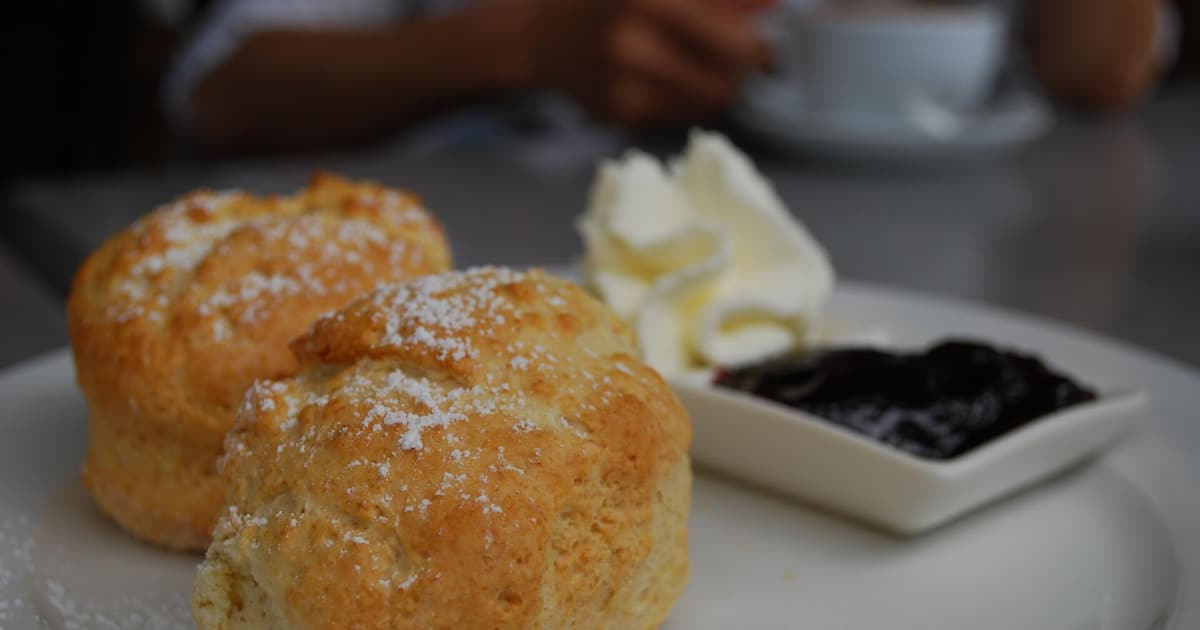

A good plain scone needs 350g self-raising flour, a little extra baking powder, 80g cold butter and a soft dough patted out at least 3cm thick. Bake it on a hot tray at 220C for about 12 minutes and you have eight, tall enough to split by hand.
That is the whole method, and the rest of this card explains why each part is written the way it is. The quantities and steps are on the ingredients card and in the numbered method below. Weigh everything if you can, because a cup of flour is an argument and 350g is not.
Method
- Put a large baking tray in the oven and heat the oven to 220C, 200C fan, gas 7.
- Mix the flour, baking powder and salt in a wide bowl. Rub in the cold butter with your fingertips until no lumps bigger than a small pea remain. Stir in the sugar.
- Beat the egg in a measuring jug and add milk up to the 170ml mark. Mix again. Pour off about a tablespoon into a cup for the glaze.
- Make a well in the dry mix and pour in the liquid. Stir with a table knife until a soft, shaggy dough forms. Stop as soon as no dry flour is left.
- Tip onto a floured worktop and fold the dough over on itself two or three times. Pat it out, without a rolling pin, to at least 3cm thick.
- Dip a 6cm plain cutter in flour. Press straight down and lift straight up. Press the trimmings together gently and cut again. Expect about eight.
- Brush only the tops with the reserved egg and milk. Take the hot tray out, lay on a sheet of baking paper, and set the scones on it, a little apart.
- Bake for 12 to 14 minutes, until well risen and golden on top and the sides feel set. Cool on a rack for 10 minutes before splitting.
Why the dough looks too wet
If you were taught that scone dough should be firm enough to roll, this one will look wrong. It should be soft and slightly tacky, and it should stick to your fingers until you flour them. A wetter dough means more steam in the oven and less work to bring it together. Firm dough usually means someone has either gone short on liquid or kept mixing. There is a limit, though: dough so wet that it slumps off the knife will spread sideways, a fault that the scone troubleshooting card goes into. Eggs and flour both vary a little, so hold back the last spoonful of milk if the mix already looks loose.
What the method is doing
Baking powder releases carbon dioxide. The Royal Society of Chemistry explains that most modern powders are double acting: one acid reacts as soon as the mix gets wet and a slower one waits for the heat of the oven. That first reaction starts the moment the milk goes in, which is why you should not leave cut dough on the worktop while you make the tea. BBC Good Food makes the same point and uses a heated tray to kick-start the rise.
Cold butter does a separate job. Chowhound's scone guide describes chilled fat turning to steam when it meets the heat of the oven, which is the puff you are after. On a warm day, cube the butter and put it back in the fridge while you weigh everything else.
The self-raising flour already contains raising agent, and the extra teaspoon and a half pushes it further for a taller scone. If you only have plain flour, our conversion card gives the amounts for 350g, and the extra spoon and a half still goes in on top.
Three small decisions that change the result
Thickness
A scone only climbs so far, so a thin round of dough makes a thin scone. Pat it thicker than feels reasonable. BBC Good Food's recipe goes up to 4cm with a 5cm cutter, and the taller, narrower shape climbs well. Our 3cm and 6cm is a slightly wider scone with more surface for jam, and either works.
Cutter
Choose a plain edge if you own one. Fluted cutters look traditional, but smooth edges cut more cleanly. Do not twist it on the way out. Pressing straight down keeps the sides open so they can rise.
Glaze
Egg and milk on the top gives a shiny brown crown. Keep it off the sides, where it can run down and glue the edge. A sprinkle of flour instead of glaze gives a paler, farmhouse look with a soft top.
Variations that keep the proportions
- Fruit scones: stir in 85g sultanas with the sugar.
- Cheese scones: leave out the sugar, add 100g grated mature Cheddar and a pinch of mustard powder with the salt, and keep a little cheese back for the tops.
- Lemon scones: rub the zest of one lemon into the sugar before you add it.
- Buttermilk scones: swap the milk for buttermilk. Its acidity gives the raising agent something extra to work with, and you may need a splash more because it is thick.
Keeping and freezing
Scones are at their best on the day they are baked, ideally just warm. After that they stale fast, so freeze whatever you will not eat. Freeze them once cool, then defrost and warm through in a low oven (about 160C, 140C fan, gas 3) for a few minutes to refresh them.
You can also freeze the cut, unbaked dough on a tray and bag it when solid, which lets you bake a couple at a time. Chowhound's contributors bake from frozen with a few extra minutes in the oven. Glaze just before baking.
One rule worth keeping with children in the kitchen: the Food Standards Agency advises against eating uncooked flour or dough, since flour is not usually treated to kill food poisoning bacteria. Bake first, lick the spoon never.
For serving, you will need to decide which goes on first, the jam or the cream. And if a sponge is next on your list, the Victoria sandwich card uses the same habit of weighing everything and working fast.
Sources opened for this card
- BBC Good Food: classic scones with jam and clotted cream
- Chowhound: 14 tips for baking better scones
- Royal Society of Chemistry, Kitchen Chemistry: the chemistry of baking powder (PDF)
- Food Standards Agency: handling flour and flour products safely
Links checked November 2026. General information only; follow official food safety advice for your household.