Scone Loft / Card box / Victoria sandwich
RecipeThe Victoria sandwich: weigh the eggs first
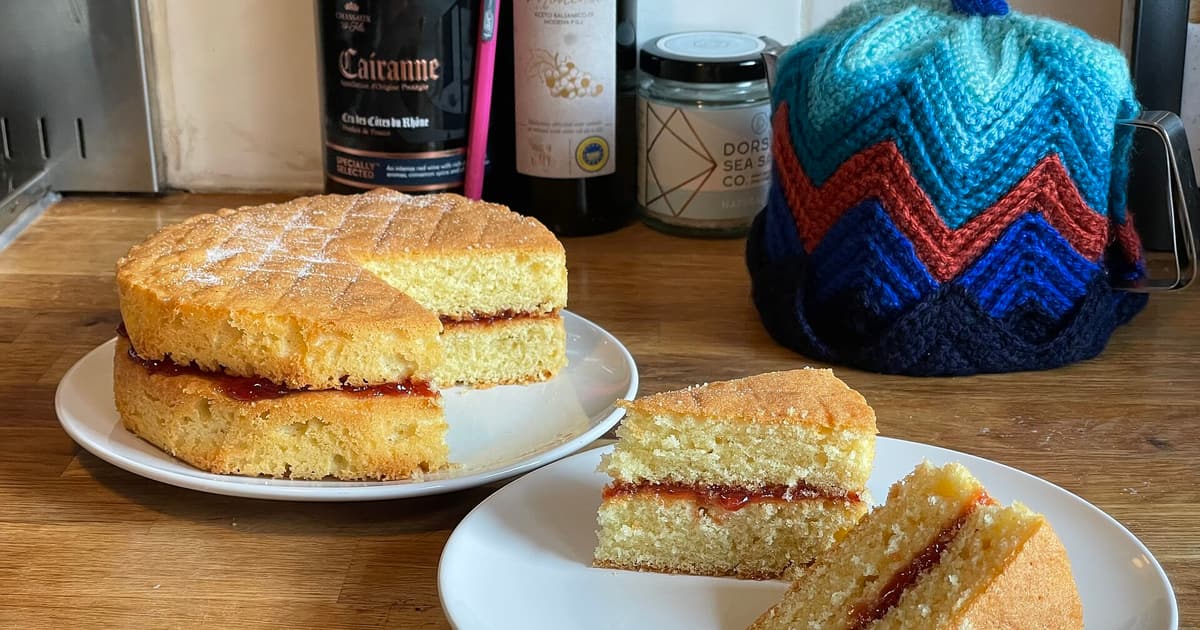

A Victoria sandwich is equal weights of egg, butter, sugar and self-raising flour, baked in two tins and sandwiched with jam. Weigh your four eggs in their shells, match the other three ingredients to that figure, and bake at 180C for about 25 minutes.
Country Life calls the weight of the eggs in their shells the lodestone of the recipe, and that is the sensible way to think about it. Eggs sold as large vary, and a fixed 225g of everything will sometimes be out of balance. Scale it to what you actually have.
Method
- Heat the oven to 180C, 160C fan, gas 4. Butter two 20cm sandwich tins and line the bases with baking paper.
- Weigh the eggs in their shells. Weigh out the same amount of butter, sugar and flour. Crack the eggs into a jug and beat them lightly.
- Beat the butter and sugar together for a good 4 or 5 minutes, until pale, soft and noticeably lighter in texture.
- Add the egg a little at a time, beating well after each addition. If the mixture starts to look curdled, beat in a spoonful of the flour.
- Sift over the flour and fold it in with a large metal spoon, using as few strokes as you can. The batter should drop from the spoon with a light shake. Fold in a spoonful or two of milk if it clings.
- Divide between the tins. Weighing them is the easiest way to get even layers. Smooth the tops.
- Bake on the middle shelf for about 25 minutes, without opening the door for the first 20. The cakes are done when golden, shrinking slightly from the sides and springing back when pressed.
- Cool in the tins for 5 minutes, then turn out on to a rack and peel off the paper. Leave until completely cold.
- Spread jam over the flat underside of one sponge, add whipped cream if using, and set the other on top. Dust with caster sugar.
Why equal weights work
The proportions are older than the name. Mrs Beeton's Book of Household Management gives "Victoria sandwiches" as recipe 1491: four eggs, "their weight in pounded sugar, butter, and flour", a pinch of salt and a layer of jam or marmalade. She wanted the batter beaten for about ten minutes, poured into a buttered Yorkshire-pudding tin, baked in a moderate oven for 20 minutes, then split, filled and cut into fingers to be piled in crossbars on a glass dish. That is a long way from a round cake on a stand, but the ratio has not moved.
Beeton gets her lift from beating alone. You could do the same, but self-raising flour makes the outcome more dependable. If yours is plain, add baking powder at the rate on our conversion card.
About that name
The popular story runs like this. Alfred Bird, the Birmingham chemist behind the custard, created baking powder in 1843 for a wife who could not eat yeast or eggs. Anna Russell, Duchess of Bedford, started the fashion for afternoon tea in the 1840s, Queen Victoria took it up, and the cake took her name. Country Life tells it this way, and it is a good story, but treat the royal part with some care. A cake being named for a queen does not prove she ate it.
The sources do not all agree. One Country Life article says Beeton's first edition left the eggs out, yet the Project Gutenberg text of the book plainly lists them. Another says baking powder does not appear in that first mention, which matches what we read there. When in doubt, read the recipe itself: it is free and it is short.
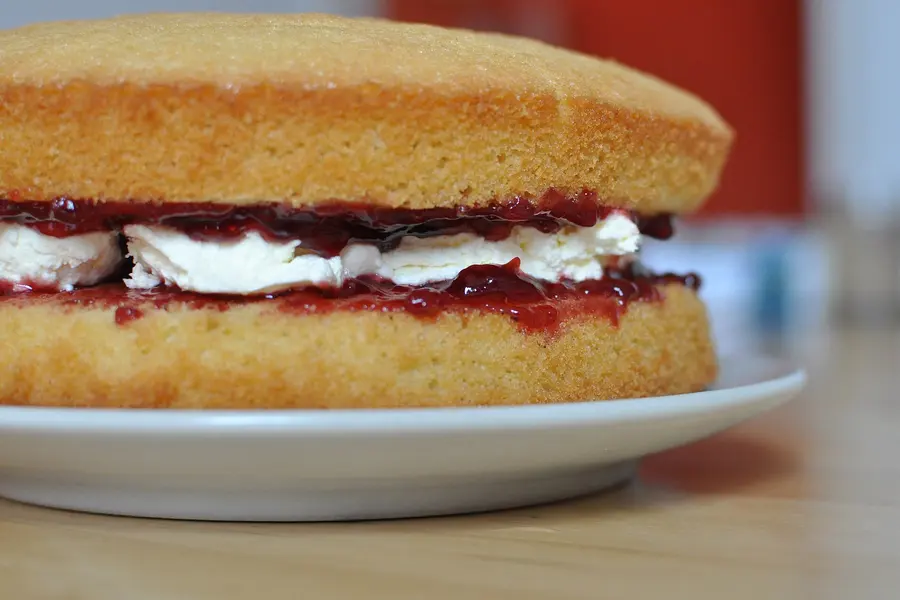
Jam only, or jam and cream?
A traditionalist answer exists. Country Life reports that the Women's Institute holds that sponges should be sandwiched with jam alone, and the food historian it quotes agrees. It is also a practical answer. A jam-only cake keeps at room temperature in a tin for a couple of days, and it slices cleanly.
Whipped cream makes a softer, more indulgent cake with a shorter life, and it has to be treated like the dairy product it is. The Food Standards Agency tells us to store dairy products in a fridge running at 0 to 5C. Fill it close to serving, keep it chilled and finish it soon. Buttercream sits in between, and is the choice many modern recipes use, including the one at BBC Good Food.

When it goes wrong
- The mixture curdled when the eggs went in
- The eggs were probably cold, or went in too quickly. Beat in a spoonful of the flour and carry on. The finished cake may be a little coarser, but it will still be perfectly good to eat.
- The cake sank in the middle
- Usually underbaked, or the door was opened while the structure was still setting. Press the centre lightly before you take it out: if your finger leaves a dent, give it a few more minutes. Too much raising agent can also make a cake rise fast and fall, so do not add extra to self-raising flour here.
- Tough, with tunnels in the crumb
- The flour was mixed too hard. Fold it in, and stop as soon as it disappears. Much the same applies to scone dough that comes out heavy.
- Domed tops
- The oven may be running hot. An oven thermometer costs little and settles the question. A slightly domed base layer can be trimmed; the cake is sandwiched flat sides in, so no one will know.
Storing and freezing
Keep the filled, jam-only cake in an airtight tin and eat it within two days. Unfilled sponges freeze well: wrap them separately once cool, and defrost overnight before filling. If you have a cake tin going spare after that, a slab of parkin is happy to wait in it for much longer. For a lighter partner at the same table, plain scones take half an hour.
Sources opened for this card
- Project Gutenberg: The Book of Household Management, Mrs Beeton
- Country Life: Victoria sponge, the ultimate test of every baker
- Country Life: how did the Victoria sponge get its name?
- Food Standards Agency: how to chill, freeze and defrost food safely
Links checked November 2026. General information only; follow official food safety advice for your household.