Scone Loft / Card box / Self-raising from plain
Know-howHow much baking powder turns plain flour into self-raising?
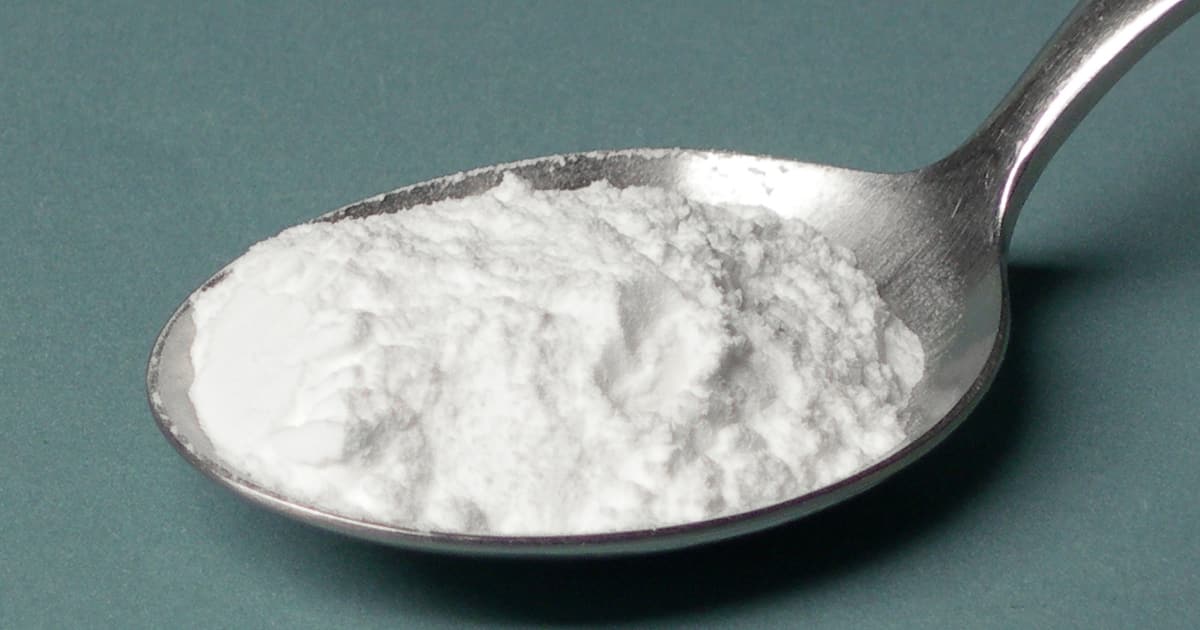

The usual rate is 2 teaspoons of baking powder for every 150g of plain flour, sifted together so the powder is evenly spread. It works for scones, sponges and most everyday British cakes, and it takes about a minute.
That figure comes from Silver Spoon's baking advice, which gives 2 teaspoons per 150g (or 6oz). Dr. Oetker says it always uses 1½ teaspoons for the same weight of flour, and that it works every time. Both are companies that sell baking ingredients, both have every reason to want your cake to rise, and they still differ by a quarter. The gap tells you something useful: self-raising flour is not a fine tolerance, and either rate makes a decent cake.
The table
| Plain flour | Silver Spoon rate (2 tsp per 150g) | Dr. Oetker rate (1½ tsp per 150g) |
|---|---|---|
| 100g | 1⅓ tsp | 1 tsp |
| 150g | 2 tsp | 1½ tsp |
| 225g | 3 tsp | 2¼ tsp |
| 350g | 4¾ tsp | 3½ tsp |
| 450g | 6 tsp | 4½ tsp |
The 225g row covers a four-egg Victoria sandwich, and the 350g row covers our plain scones. These are our own sums from the two published rates, rounded to what a measuring spoon can reasonably manage.
How to do it properly
- Weigh the plain flour into a bowl.
- Measure the baking powder with a proper measuring spoon and level it off with a knife. A heaped teaspoon holds a good deal more than a level one, and too much is as bad as too little.
- Sift the two together. Silver Spoon and Dr. Oetker both tell you to sieve, because a pocket of unmixed powder leaves a bitter spot and a pocket of plain flour does nothing. Sifting twice costs very little.
- Use it straight away, or store it in a labelled airtight jar with the date on.
Which rate should you use?
This is our view, not a rule from either company. For scones and plain sponges, where height is the whole point, we would use the fuller 2 teaspoons. For a rich, buttery cake or one heavy with fruit, the lower rate is the safer choice, because too much gas can make a cake rise fast and then sink. If the recipe already asks for extra baking powder on top of self-raising flour, read that as a sign the author wants a strong rise, and keep the extra in. And mix only what you need for the bake in front of you. A jar of ready-mixed flour is convenient, but it goes off as the powder does, so a small batch is better than a large one.
Why this works, and why bicarbonate alone does not
The Royal Society of Chemistry's Kitchen Chemistry sheet sets it out clearly. Baking powder is sodium hydrogencarbonate (bicarbonate of soda) mixed dry with a solid acid such as cream of tartar. They do not react until water arrives. Most modern powders are double acting, with a fast acid that starts on mixing and a slower one that waits for the oven.
Bicarbonate of soda on its own can make gas when it is heated, but the same sheet warns that this also leaves sodium carbonate, which has an unpleasant alkaline taste. So it needs an acid in the mix. That acid might be buttermilk, yoghurt or treacle, which explains why bicarb appears in our parkin. Swapping it in for baking powder, spoon for spoon, in a plain sponge is likely to give a harsh taste and an uneven rise.
Silver Spoon adds one refinement: if the recipe has cocoa, buttermilk or yoghurt in it, you can also add ¼ teaspoon of bicarbonate of soda.
Does the baking powder still work?
Baking powder goes off. The same sheet says it will lose its ability to produce gas if it is stored for some time in the kitchen, which makes sense given that it only needs a little moisture to get going. Keep the tub shut, use a dry spoon, and store it somewhere cool and dry, as the label on most tubs tells you.
A quick test follows from the chemistry. Drop half a teaspoon into a little hot water. A lively fizz means it is fine; a few lazy bubbles means buy a new tub. Old raising agent is among the first things to check on a batch of scones that will not rise.

Going the other way, and other questions
Can I use self-raising when a recipe says plain?
Not as a general rule. Pastry, shortbread and many biscuits are written around plain flour, and a raising agent will make them puff or spread. Recipes for cakes that already use plain flour plus a measured raising agent can sometimes be adapted, by leaving that raising agent out, but you are guessing at the balance.
Does this work for gluten-free flour?
Dr. Oetker's answer is yes, with a larger dose: 3 teaspoons of gluten-free baking powder for 150g of gluten-free plain flour, combined with a sieve in the same way. Check the baking powder itself, because it is not automatically gluten free, and anyone baking for someone with coeliac disease should check every label.
How long has self-raising flour been around?
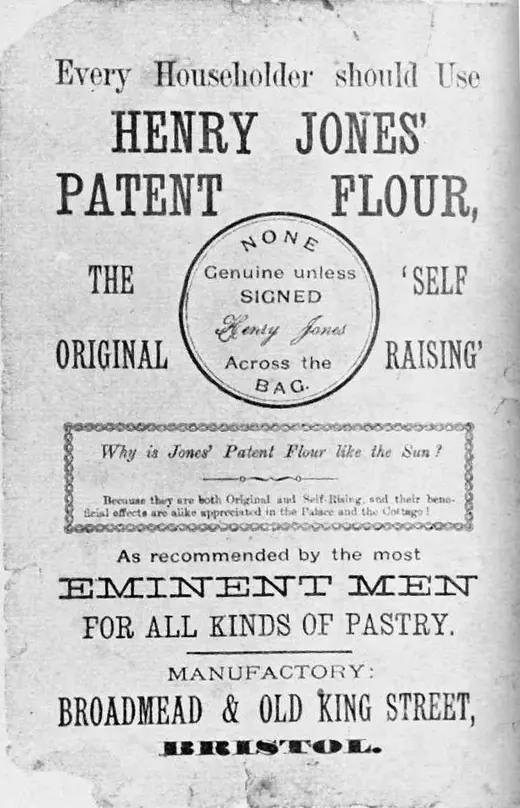
Country Life's account says that Henry Jones, a Bristol baker, used Alfred Bird's unpatented baking powder idea in his own self-raising flour. His advertisements, like the one above, made rather large claims for it.
Can I taste a bit of the mix to check it?
Please do not. The Food Standards Agency advises against eating uncooked flour or dough, on the grounds that flour is not usually treated to kill food poisoning bacteria. The advice applies to all flours, and particularly to young children, older people and anyone with a weakened immune system.
Sources opened for this card
- Silver Spoon: how to turn plain flour into self-raising flour
- Dr. Oetker: how to make self-raising flour
- Royal Society of Chemistry, Kitchen Chemistry: the chemistry of baking powder (PDF)
- Country Life: how did the Victoria sponge get its name?
- Food Standards Agency: handling flour and flour products safely
Links checked November 2026. General information only; follow official food safety advice for your household.