Scone Loft / Card box / Yorkshire parkin
RecipeYorkshire parkin, and why it has to wait
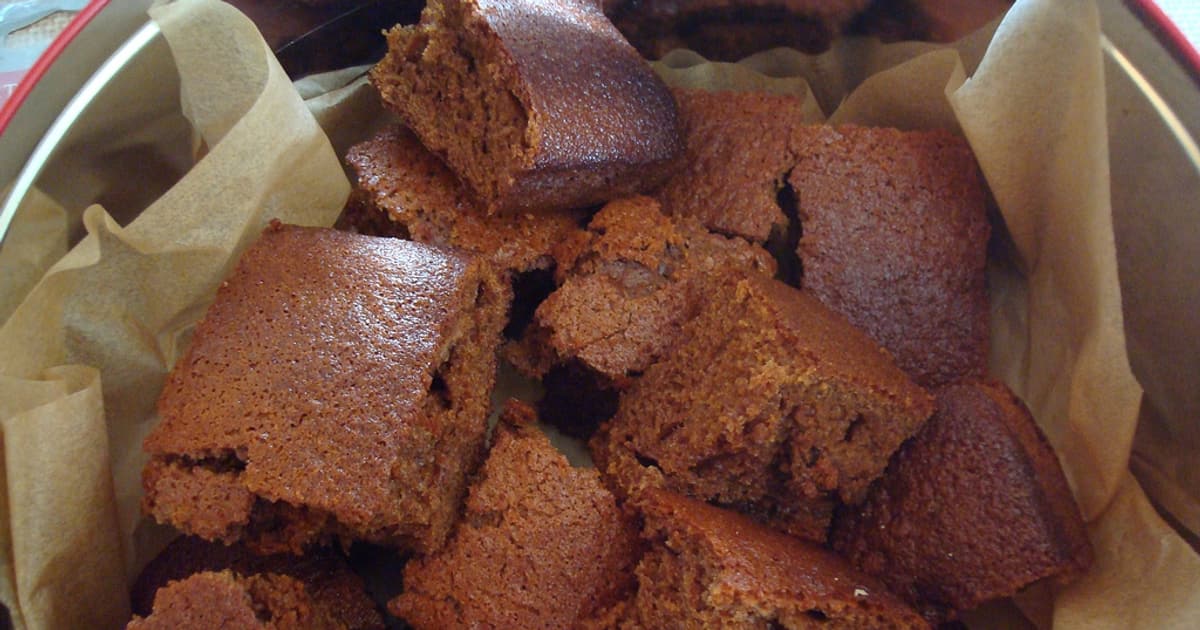

Parkin is a dark oatmeal cake made with treacle, golden syrup and ginger. It is traditionally eaten on Bonfire Night in Yorkshire. Bake it at 160C for 50 to 60 minutes, and then, which is the difficult part, wrap it up and leave it alone for about five days.
A piece on the day it is baked is a pleasant, somewhat dry and crumbly ginger cake. A piece five days later is a different thing, damp and sticky. BBC Good Food says the same, recommending up to five days of waiting and noting that it keeps softening for as long as two weeks. So if you want it for 5 November, the baking day is around 31 October.
Method
- Heat the oven to 160C, 140C fan, gas 3. Butter a deep 20cm square tin and line it with baking paper.
- Put the butter, sugar, syrup and treacle in a large pan over a gentle heat. Warm, stirring now and then, until the butter has melted and the sugar has dissolved. Do not let it boil.
- Take the pan off the heat and leave for 5 minutes. Mix the oatmeal, flour, ginger, mixed spice, bicarbonate of soda and salt in a bowl.
- Stir the dry ingredients into the pan until no flour shows. Beat the egg and milk together with a fork and stir them in too. The batter will be loose and glossy.
- Pour into the tin and bake for 50 to 60 minutes, until firm when pressed and slightly crusty on top. A dip in the middle is normal.
- Leave to cool completely in the tin. Lift out, wrap in baking paper and then foil, or put it in an airtight tin.
- Store somewhere cool for about five days before you cut it. It will turn softer and stickier as it sits.
Choosing the ingredients
Oatmeal
Use medium oatmeal, not porridge oats. Oatmeal is what gives parkin its slightly gritty, nubbly crumb, and it soaks up moisture over the days of waiting. Rolled oats make something closer to a flapjack. Fine oatmeal works, though the crumb will be closer and more cake-like. If you can only get porridge oats, pulse them briefly in a food processor.
Treacle and syrup
Black treacle gives colour and a bitter, almost burnt edge, while golden syrup brings the sweetness and the stickiness. Plenty of recipes shift the balance between them. More treacle makes a darker and more grown-up cake. All treacle is rather much for most people. A tip for weighing: put the pan on the scales, set to zero, then pour straight in, and there is nothing to scrape out of a spoon.
Bicarbonate of soda
Treacle and brown sugar are both a little acidic, which gives bicarb something to react with. This is why parkin uses it instead of baking powder. The chemistry is on our flour and raising agents card. Measure it carefully, since too much will make the cake taste soapy.
A cake with a court record
Parkin's history is mostly Yorkshire legal paperwork, which is rather good fun. The Yorkshire Historical Dictionary, from the University of York, quotes a Pontefract session roll of 1729 in which a mistress at Elland is said to have persuaded a servant to ask another to steal meal "to make a parkin". The same entry mentions parkin "pigs" made with currants for eyes.
Foods of England records the name at the Yorkshire Assizes of 1797, in a case involving "a cake of parkin laced with arsenic". It turns up more peacefully in Dorothy Wordsworth's journals around 1800, and in a dialect guide of 1828 that describes it as a cake of treacle and oatmeal. The earliest actual recipe Foods of England could find dates from 1859, in J.H. Walsh's The English Cookery Book.
The cake has changed along the way. The York dictionary, citing Peter Brears, says earlier parkins were thin oatmeal cakes baked straight on the bakstone, and that the modern kind came with ovens and bicarbonate of soda from the mid-19th century. Treacle or golden syrup was essential throughout. As for the name, it says the origin remains obscure. It is tempting to connect it with Parkin as a pet form of Peter or a surname, though no evidence for that has been found.
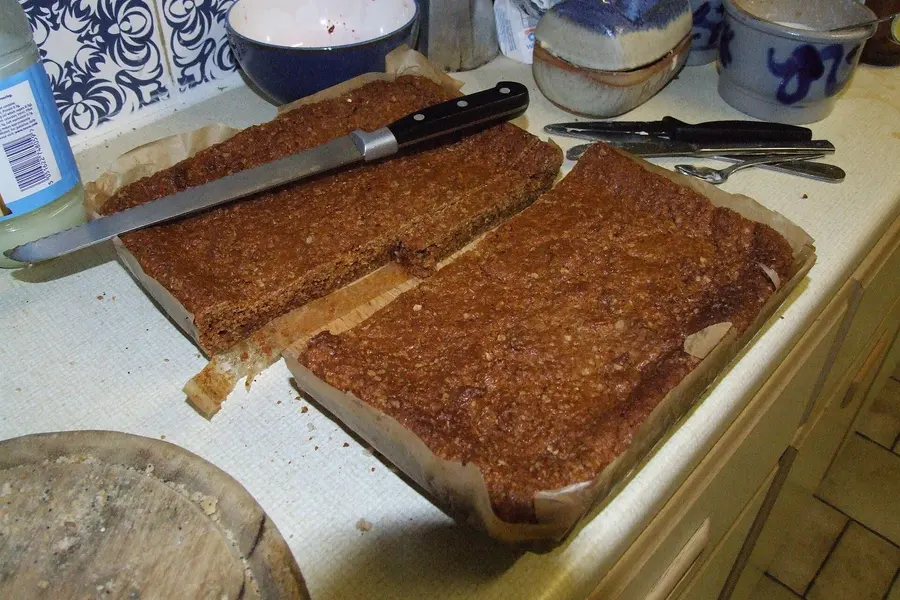
The link with 5 November is firmly traditional, and the Yorkshire Historical Dictionary states it plainly, but we have not found a dependable date for when it began. Parkin is made and claimed elsewhere in the north too, as the Lancashire tray below shows.

Common questions
Mine sank in the middle. Is it ruined?
No. A shallow dip is normal in a batter this heavy with syrup, and it does not affect the eating. A deep crater with a raw-looking centre means it came out too soon, or that too much bicarb went in.
It came out dry. Can I fix it?
Probably, yes. Wrap it tightly and give it longer. If it is still dry after a week, it may have been overbaked. Check it at the 50-minute mark next time. Slices of dry parkin are also very good warmed with custard, which is how Foods of England says it is sometimes served.
How long does it keep?
BBC Good Food gives up to two weeks in paper and foil. Keep it somewhere cool and dry, and check it, since a damp cake can eventually grow mould in a warm kitchen.
Can I change the spice?
Yes. Ginger is the only one that really matters. Some cooks add nutmeg or a little ground cloves in place of mixed spice. A tablespoon of chopped stem ginger is a pleasant extra.
What goes with it?
Tea, mainly. Being a sturdy cake, it is good for carrying outdoors to a bonfire. For the rest of the baking year, try a Victoria sandwich, which is the opposite in every respect, or a quick batch of scones.
Sources opened for this card
- Yorkshire Historical Dictionary, University of York: parkin
- Foods of England: parkin
- BBC Good Food: parkin
Links checked November 2026. General information only; follow official food safety advice for your household.